
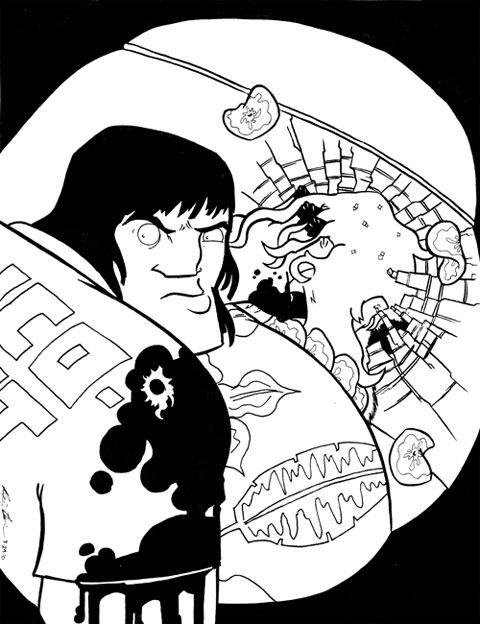
“Don Gately was a twenty-seven-year-old oral narcotics addict (favoring Demerol and Talwin), and a more or less professional burglar; and he was, himself, unclean and violated” – (55)
Addiction
In Boston, former alcoholics and drug addicts have a term for the place some people get to before being ready to admit they have a problem and reach out for help: hitting Bottom.
“The B.U. punter (Orin Incandenza) was a hometown Boston kid… and had the potential to be a lock for a pretty much limitless pro ball career… The B.U. punter was two years younger than Don Gately. Gately’s big digits could barely fit around the iron’s EZ-grip handle, and stooping over the ironing board made the small of his back ache, and he hadn’t eaten anything except deep-fried stuff out of shiny plastic packaging for like a week, and the stink of the plastic laminates under the iron stunk wicked bad, and his big square face sagged lower and lower as he stared at the punter’s ghostly digital image until he found himself starting to cry like a babe. It came out of emotional nowheres all of a sudden, and he found himself blubbering at the loss of organized ball, his one gift and other love, his own stupidity and lack of discipline, that blasted cocksucking Ethan From, his Mom’s Sir Osis and vegetabilization and his failure after four years ever yet to visit, feeling suddenly lower than bottom-feeder-shit.” (916)
The above passage is not Gately’s Bottom. But it is the first time he and Orin Incandenza, Hal’s older brother, “meet.” After 900 pages, David Foster Wallace finally offers a clear juxtaposition between two characters that take very different paths during the events of the novel. Orin was the embodiment everything addiction had taken away from Gately.
The passage also serves another function. Wallace places this passage late in the novel, which chronologically occurs before the book’s main story, to show how far Gately has come as a now-recovering addict.
While Infinite Jest initially appears to be about a gifted tennis player, Hal Incandenza, and his experience dealing with crushing expectations and a crazy family, it quickly evolves to be a story of Don Gately and his addiction, recovery and ultimately, redemption. His story is Wallace’s most emphatic declaration that there is potential for good in all of humanity. Sven Birkerts said it well in his 1996 review of Infinite Jest in The Atlantic, writing that “when tenderness and conscience announce themselves in the soul of a thug, we cannot but be moved. So, too, we have to smile at the fumbling steps he (Gately) takes on his way to true self-reconstruction.”
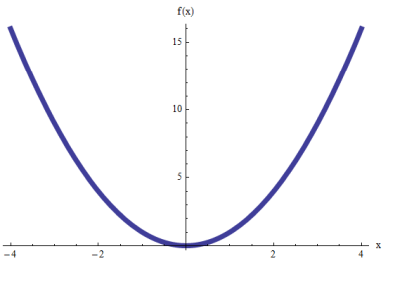
If we visualize Gately’s journey from burglar and oral narcotics user at the beginning of the novel to recovering addict serving as a halfway house live-in counselor as a simple parabola, then we can place his breakdown in the passage with Orin as only being halfway down the first slope.
Gately’s later failure to help Gene Faukelman, his then-fellow oral narcotic addict and partner-in-crime, both working under W. Sorkin, who Faukelman had, in effect, stolen money from and was very much a dead man walking still isn’t Gately’s moment of hitting Bottom. But importantly, Wallace chooses to end the novel with that passage, where instead of helping Faukelman, Gately decides to get high on Demoral with him – to the point they are using their own piss as the liquid base to get high off of. Then when Sorkin’s new henchman “C” eventually finds them, Gately is so high that he can do nothing but sit there and mumble while C’s crew sew open Faukelman’s eyes and eventually eliminate his “map.” Gately’s failure to help Faukelman is a poignant illustration at the end of the novel of how horrible the eventual slide to hitting Bottom is for addicts.
Infinite Jest makes clear that personal failings, like Gately’s addiction, never emerge from nothing. The trauma that links to Infinite Jest’s characters’ shortcomings is often related to parents. See Hal and the man Himself, Joelle and her Daddy, Orin and the Moms and most importantly to this essay, Don Gately and his mother.

Wallace actually offers an inane example of this early on in the novel.
“Another way fathers impact sons is that sons, once their voices have changed in puberty, invariably answer the telephone with the same locations and intonations as their fathers. This holds true regardless of whether the fathers are still alive.” – (32)
Gately and Orin, the two characters juxtaposed at the beginning of this essay, suffer(ed) addiction which can be traced to their mother. With Gately, the origin of his substance abuse is shown when he remembers his childhood living with his alcoholic mother and abusive boyfriend.
“Don Gately suddenly started to remember things he would just as soon not have. Remembered. Actually remembered’s probably not the best word. It was more like he started to almost reexperience things that he’d barely even been there to experience, in terms of emotionally, in the first place…To the extent it’s Gately’s place to diagnose anybody else as an alcoholic, he mom was pretty definitely an alcoholic. She drank Stolichnaya vodka in front of the TV… Gately at like ten or eleven used to pretend to listen and watch TV on the floor but really be dividing his attention between how close his Mom was to unconsciousness and how much Stolichnaya was left in the bottle… After she went under for the evening and he’d carefully taken the tilted glass out of her hand, Don’d take the bottle and mix the first couple vodkas with Diet Coke and drink a couple of those until it lost its fire, then drink it straight.” (448)
His mother never forced him to drink. But the circumstances leading to Gately’s abuse are clear. With Orin, the personal failing is just as obvious as Gately’s: sexual addiction. He relentlessly seeks out married women that have children, clearly connecting his addiction to Avril – the person who cheated on her husband with “not one not two but over thirty near Eastern medical attaches...”
Recovery
This is where Don Gately and Orin Incandenza’s story diverge. By the end of the novel, Orin is still addicted to sex, sleeping with a woman he meets at the airport who he thinks is a married Swedish hand model with two daughters, but is really Luria P., an agent for Les Assassins des Fauteuils Rollent, who eventually tortures him to find the master copy of James Incandenza’s final film, Infinite Jest.
But this story is not about Orin. It’s about Gately and his recovery and redemption.
When Gately is thinking about his time as a resident in Ennet House, he recalls a dream he had after another resident got discharged for violating house rules and OD’ing on Ny-quil.
“In the dream Gately and row after row of totally average and non-unique U.S. citizens were kneeling on their knees on polyester cushions in a crummy low-rent church basement… Everybody was kneeling on these cheap but comfortable cushions, and it was weird because nobody seemed to have any clear idea why they were all on their knees, and there was like no-tier-boss or sergeant-at-arms type figure around coercing them into kneeling, and yet there was a this sense of some compelling unspoken reason why they were all kneeling…And but then some lady over to Gately’s left got off her knees and all of a sudden stood up, just like to stretch and the minute she stood up she was all of a sudden yanked backward with terrible force and sucked out through the one of the clear glass walls of the basement…And it was then, as he looked around, that Gately in his dream looked slowly up overhead at the ceiling’s exposed pipes and could now all of a sudden see, rotating slow and silent through the basement a meter above the different-shaped and-colored heads of the kneeling assembly, he could see a long plain hooked stick, like the crook of a giant shepherd, like the hook that appears from stage-left and drags bad acts out of tomato-range.” – (358)
The allegory here is clear. The “citizens… kneeling on their knees on polyester cushions in a crummy low-rent church basement” are addicts – most Boston AA meetings take place in crummy low-rent church basements. The addicts have reached their Bottom, now submitting themselves – kneeling – to an unknown power. They don’t actually know why they’re submitting, but they are. And if you get up, even “just like to stretch,” then the hooked stick will take you away. What’s important isn’t learning why you should be kneeling, it’s to just fucking kneel, which is what recovery in AA is about. And that’s exactly what Gately does…
“And that was the first night that cynical Gately willingly took the basic suggestion to get down on his big knees by his undersized spring-shot Ennet House bunk and Ask For Help from something he still didn’t believe in, ask for his own sick Spider-bit will to be taken from him and fumigated and squished.” – (360)
Recovery from addiction is about taking a real leap of faith and being open to receive guidance from a power you might not even believe in. It’s about doing away with cynicism. In a way, it is directly opposed to the idea of American Exceptionalism – the idea that we are special individuals who have the ability to chart our journey if we just put our mind to it. When it comes to addiction, we’re all just “totally average and non-unique U.S. citizens.”
Tossing aside cynical attitudes and asking for help is hard. Being earnest and open to advice from others is really hard. But the thing is, addiction has afflicted countless people before us. A lot of these people have recovered and have advice to give to those still suffering from addiction. Kneeling before a higher power you don’t understand isn’t about making you believe in some Christian God. It’s about throwing aside cynicism and replacing it with an openness to the love, advice and instructions of others. Gene M., Gately’s counselor, put it best in the below passage.
“He told Gately to just imagine for a second that he’s holding a box of Betty Crocker Cake Mix, which represented Boston AA. The box came with directions on the side any eight-year-old could read. Gately said he was waiting for the mention of some kind of damn insect inside the cake mix. Gene M. said all Gately had to do was for fuck’s sake give himself a break and relax and for once shut up and just follow the directions on the side of the fucking box. It didn’t matter one fuckola whether Gately believed a cake would result, or whether he understood the like fucking baking-chemistry of how a cake would result: if he just followed the motherfucking directions, and had sense enough to get help from slightly more experienced bakers to keep from fucking the directions up if he got confused somehow, but basically the point was if he just followed the childish directions, a cake would result. He’d have his cake” – (467)
Gately’s counterpart in the book, Orin, takes a different approach when given advice. When Orin is a teenager, he and his friends are caught with a pornographic film they planned on watching as a group. Orin’s father, Jim, the then-headmaster of the school, sits him down and gives some rare fatherly advice.
“Himself told Orin he wasn’t going to forbid them to watch the thing if they really wanted to… But Himself said that if Orin wanted his personal, fatherly as opposed to headmasterly, take on it, then he, Orin’s father – though he wouldn’t forbid it – would rather Orin didn’t watch a hard-porn film yet. He said this with such reticent earnestness there was no way Orin couldn’t ask him how come. Himself felt his jaw and pushed his glasses up several times and shrugged and finally said he supposed he was afraid of the film giving Orin the wrong idea about having sex. He said he’d personally prefer that Orin wait until he’d found someone he loved enough to want to have sex with and had sex with this person, that he’d wait until he’d experienced for himself what a profound and really quite moving thing sex could be, before he watched a film where sex was presented as nothing more than organs going in and out of other organs, emotionless, terribly lonely.” – (956)
This passage is startling because it hits directly at Orin’s sexual addiction. Throughout the entire book, it is made clear that he approaches sex as a sort of game – seeking out married women with children. His father directly tells him that he wants him to understand “what a profound and really quite moving thing sex could be.” It’s not just “organs going in and out of other organs.” Unfortunately, Orin doesn’t take the advice.
“What poor old O. claimed to have found so moving was Himself’s assumption that O. was still cherry. What moved me (Hal) to feel sorry for Orin was that it seemed pretty obvious that that had nothing to do with what Himself was trying to talk about.” – (956)
Orin had already lost his virginity and believed he was above his dad’s advice. This is the cynical attitude. But if he had “for once shut up and just follow(ed) the directions from a more experienced baker,” he may have picked up on what his dad was saying. Sex doesn’t need to be an “emotionless, terribly lonely” thing, which it had clearly became for him as he grew older. Orin could’ve “ha(d) his cake.” But he never took the leap of faith, knelt and listened – that’s why he does not recover from his sexual addiction.

Redemption
But Infinite Jest is much more than a story about Don Gately’s recovery from addiction and Orin’s inability to move past it. Gately is the hero. And any good hero needs to have their chance at redemption.
The difference between redemption and recovery is simple: recovery is about being open to take advice, while redemption is about actively helping others in need. This is best illustrated in the below passage, which takes place at the start of a Boston AA meeting that Gately and the Ennet House residents attend.
“Sobriety in Boston is regarded as less a gift than a sort of cosmic loan. You can’t pay the loan back, but you can pay it forward, by spreading the message that despite all appearances AA works, spreading this message to the next new guy who’s tottered in to a meeting and is sitting in the back row unable to hold his cup of coffee” – (344)
Gately, when he was an addict, was someone who did not help others in need. At the start of this essay, I mentioned Gately’s inability to help Gene Faukelman as he was about to be killed by W. Sorkin and C. This passage not only illustrated how far he had fallen, but highlighted a common thread that Wallace carefully weaves throughout the telling of Gately’s story.
When others were in need, he failed to do something to help. In the cases of Faukelman, instead of helping him, Gately decides to get high off Demoral and can’t do anything but mumble when Faukelman is killed. During a conversation with Joanne, Gately mentions how he was drunk at a bar with a group and how they failed to help a friend who had just been shot in fight (531). And when Gately was a kid, he failed to stand up for the weird old lady across the street who had shown him love and kindness. And after she is bullied by neighbors, she eventually kills herself.
With this context, it makes sense that Don, during the depths of his addiction, dreamed of helping others.
“Late in Gately’s Substance and burglary careers, when he’d felt so low about himself, he’d had sick little fantasies of saving somebody from harm, some innocent party, and getting killed in the process and getting eulogized at great length.” – (611)
However, the most poignant example of Gately’s inability to help others in need comes when he is in the hospital, after his fight with the Nucks (Canadians) that were threatening Randy Lenz and the Ennet House residents. Gately has a vivid dream where he remembers something his mother’s abusive boyfriend, the M.P., used to do.
“What Gately remembers, in pain, bubbling just under the lid of sleep, is the special and precise way the M.P. would handle the flies that came into the kitchen… He’d whack them as they lit on the kitchen table. The flies. But in a controlled way. Not hard enough to kill them. He was very controlled and intent about it. He’d whack them just hard enough to disable them. Then he’d pick them up real precisely and remove either a wing or like a leg, something important to the fly… The maimed fly itself he’d ignore and allow to scuttle in crazed circles on the table until it got stuck in a sticky spot or fell off the edge onto the kitchen floor… The ones that fell to the floor Gately would hunch directly over on hands and knees, getting one big red ear down just as close to the fly as possible, listening, his big pink forehead wrinkled.
What makes Gately most uncomfortable now as he starts to try to wake up in the lemon light of true hospital morning is that he can’t remember putting the maimed flies out of their misery, ever, after the M.P. passed out, can’t mentally see himself stepping on them or wrapping them in paper towels and flushing them down the toilet or something, but he feels like he must have; it seems somehow real vital to be able to remember his doing something more than just hunkering blankly down amid his Transformer-cars and trying to see if he could hear tiny agonized screams, listening very intently. But he can’t for the life of him remember doing more than trying to hear.” – (843)
Gately didn’t even help the flies. He just stood there, “hunkering blankly down.” Looking back, he wanted to have done more. In fact, in this dark moment in the hospital, “it seems somehow real vital to be able to remember his doing something.” And that makes sense. Gately’s life as an addict is marked with examples of him failing to help others.
But that’s not Gately we know by the end of the novel. Don Gately, a bear of a man who grew up in an incredibly sad circumstance, with an alcoholic mother and abusive boyfriend, gets kicked off his high school football team and quickly turns to a life of drug addiction and crime. He then watches a friend get killed while he himself is high off Demoral and eventually goes to jail after getting caught for a small-time burglary. This same Don Gately, after hitting Bottom, finally decided to kneel down and listen. He becomes clean, takes a job helping out addicts as the live-in counselor of the halfway house that he was once a resident at. And finally, when the climax of the novel occurs, we see the full redemption arc. The parabolic slope upward is finally complete, and the drug-addicted thug we once knew has become the hero of the novel.
And what is the climax of the novel? In my view, it’s when Randy Lenz, cocaine addict and (former) resident of Ennet House, decides to violently kill a dog, belonging to a group of large Canadian men, drawing them and their murderous intent towards the halfway house, where Gately is keeping watch as night staff. When all the residents, including Lenz, are moving their cars to the other side of the road at night, Gately is quickly called outside, hears screams and asses the situation.
“Two almost Gately-sized beared guys in loose like bowling-wear shirts with flowers or suns on them and what look like big faggy necklaces of flowers around what would be their necks if they had necks turn out to be chasing Randy Lenz around this Montego car. Yet another guy with a necklace and a plaid Donegal is holding the rest of the residents at bay on the lawn of #4 with a nasty-looking Item expertly held. Everything now slightly slows down; at the sight of an Item held on his residents there’s almost a kind of mechanistic click as Gately’s mind shifts into a different kind of drive. He gets very cool and clear and his headache recedes and his breathing slows. It’s not so much that things slow as break into frames” – (608)
When Gately sees an Item (Boston term for a gun) pointed at his residents, his priority is clear. Regardless of how the situation started, he needs to help these people. While the men are chasing Lenz around a car, Gately intercedes, fighting them both off. The Canadian men say they only want Lenz and tell Gately to stay out of it, but “Gately’s stance has the kind of weary resolution of like You’ll Have to Go Through Me.” In fact, Don says “he’s responsible for these people on these private grounds tonight and is part of this whether he wants to be or not.”
Even though he knows Lenz is a piece of shit and probably deserved whatever ire the Nucks have against him, Gately does what he didn’t do before as an addict – he protects those in need of it. Gately “repays the cosmic loan.” He fights three Nucks, one with a gun, getting the best of two of them. Eventually, “Gately’s punched so hard in the shoulder he’s spun around on one knee and almost goes over backwards and the shoulder goes hotly numb, which tells Gately he’s gotten shot instead of punched in the shoulder. He never got shot before.”
And when Gately is later in the hospital, recovering from the gunshot wound, Joelle looks at him and thinks what we are all thinking at this point.
“What’s admirable is he (Gately) has no idea how heroic or even romantic he looks, unshaven and intubated, huge and helpless, wounded in the service to somebody who did not deserve service” – (855)
The End
Wallace decided to introduce Gately in a very blunt fashion at the start of the novel, calling him an “unclean and violated” “oral narcotics addict” and “burglar.“
Despite this introduction, Gately, by the end of the novel, becomes the hero. While many readers may have been disappointed that we did not get to see the Canadians insurgents attack the Enfield Tennis Academy or Hal do something of significance (confront his mother, run into Joelle, etc.), I find so much joy and love in Wallace’s choice to focus on Gately. He builds this character, a former addict and thug who is also vulnerable, kind and broken, and makes him the grand centerpiece of this sprawling behemoth of a novel.
If someone like Gately, who becomes an addict from entirely reasonable circumstances, is able to throw aside his cynicism, kneel down, accept guidance and love, and then give that all back to others in need, then isn’t there hope for all of us in this weird, winding journey of life?
Rest in Peace David Foster Wallace

 Coc0na's Pure Illusion
1 Comment